Research
This page brings together selected research that trace the development of Hannah Shillito's practice over time.
While the materials and methods continue to shift — from print and collage to installation, performance, body adornment, photogrammetry and immersive environments — these works share ongoing concerns with surface, scale, visibility, language and the body.
Shillito approaches research not as a closed outcome, but as sites of testing: where ideas are stretched, fail, reappear and evolve.
Shimmer as Feminist Methodology
Hannah Shillito's practice-led research explores shimmer as an eco-materialist feminist methodology, questioning how surface, material and perception shape our understanding of identity, femininity and value.
Working across sculpture, textiles, fashion, performance and installation, she challenges the idea that glamour, decoration and excess are merely superficial. Instead, she investigates how reflective, synthetic, reclaimed and bio-derived materials can disrupt established hierarchies between beauty and substance, art and craft, permanence and disposability.
Through experimentation with iridescent surfaces, translucent fabrics, light and movement, Hannah explores the shifting relationships between bodies, materials and their environments. Her research considers the cultural and ecological contradictions of materials associated with both glamour and waste.
Making is central to this enquiry. From playful experiments with shimmering materials suspended among trees to speculative digital installations and participatory performances, Hannah approaches artistic experimentation as a way of generating knowledge rather than simply illustrating existing theories.
What if shimmer is not simply something we see, but a way of understanding the world?

DIGITAL ERROR → IMMERSIVE SPACE
2025
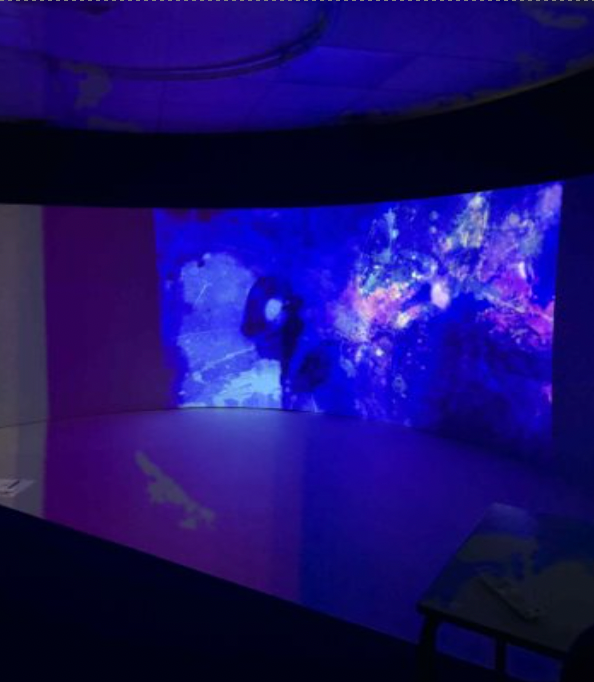
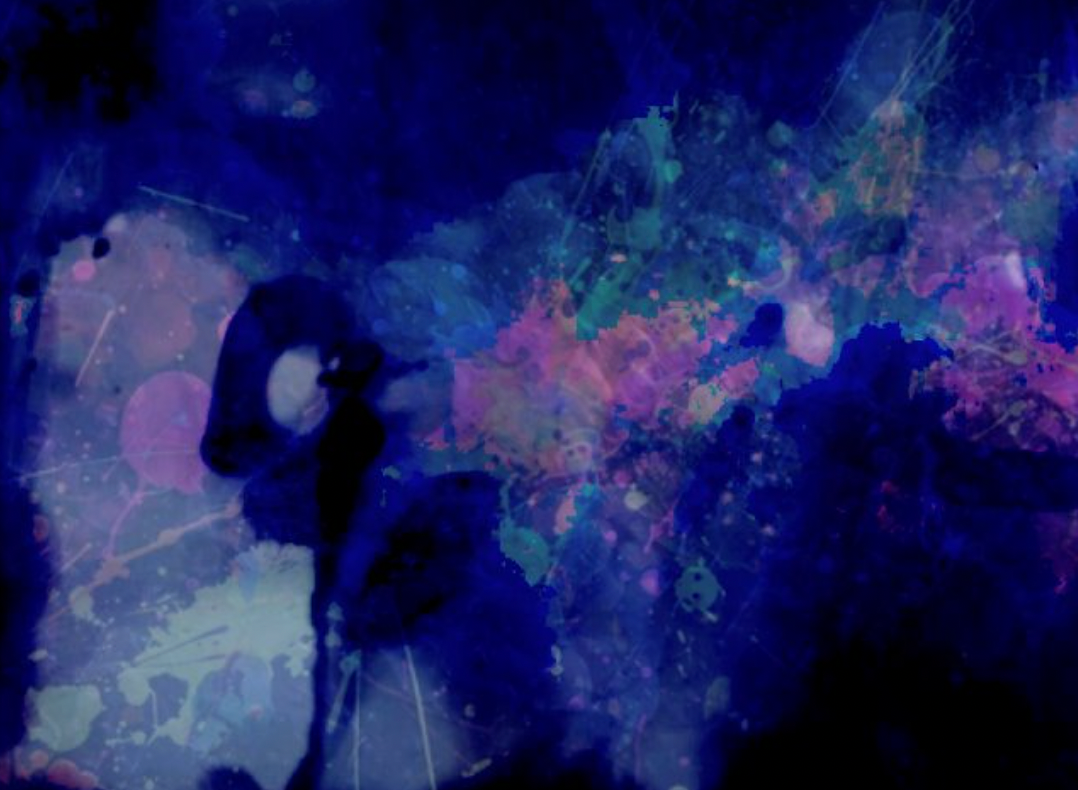
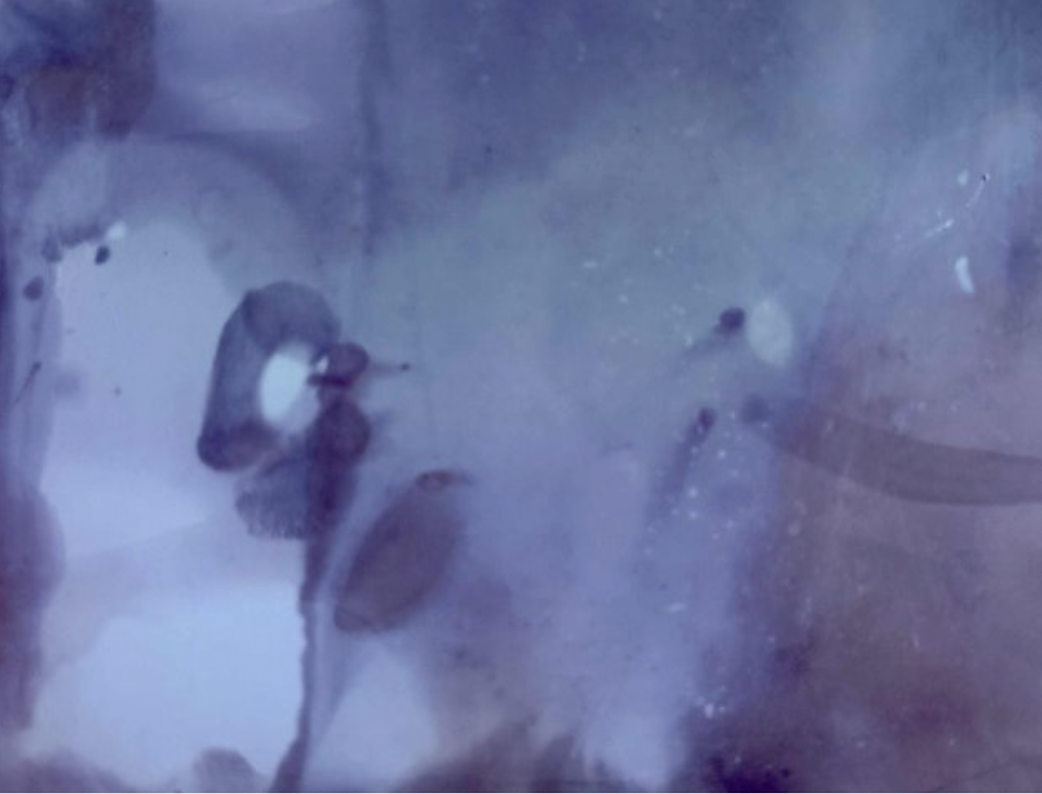
This project developed through experiments with photogram processes and image-based error, treating technical failure not as a flaw but as a generative condition. Distortions produced through scanning, exposure, and translation were retained and expanded, allowing breakdowns in the image to become material in their own right.
Works from the Photogram Errors series were translated into an immersive installation, extending flat image distortions into spatial environments. Scale, proximity, and bodily movement became active components of the work, producing unstable perceptual conditions that resist fixed viewpoints and clear orientation. Rather than offering a resolved image, the installation situates the viewer inside a field of uncertainty, where surface, depth, and spatial logic continually shift.
SURFACE / SHIMMER / MATERIAL INSTABILITY
2025
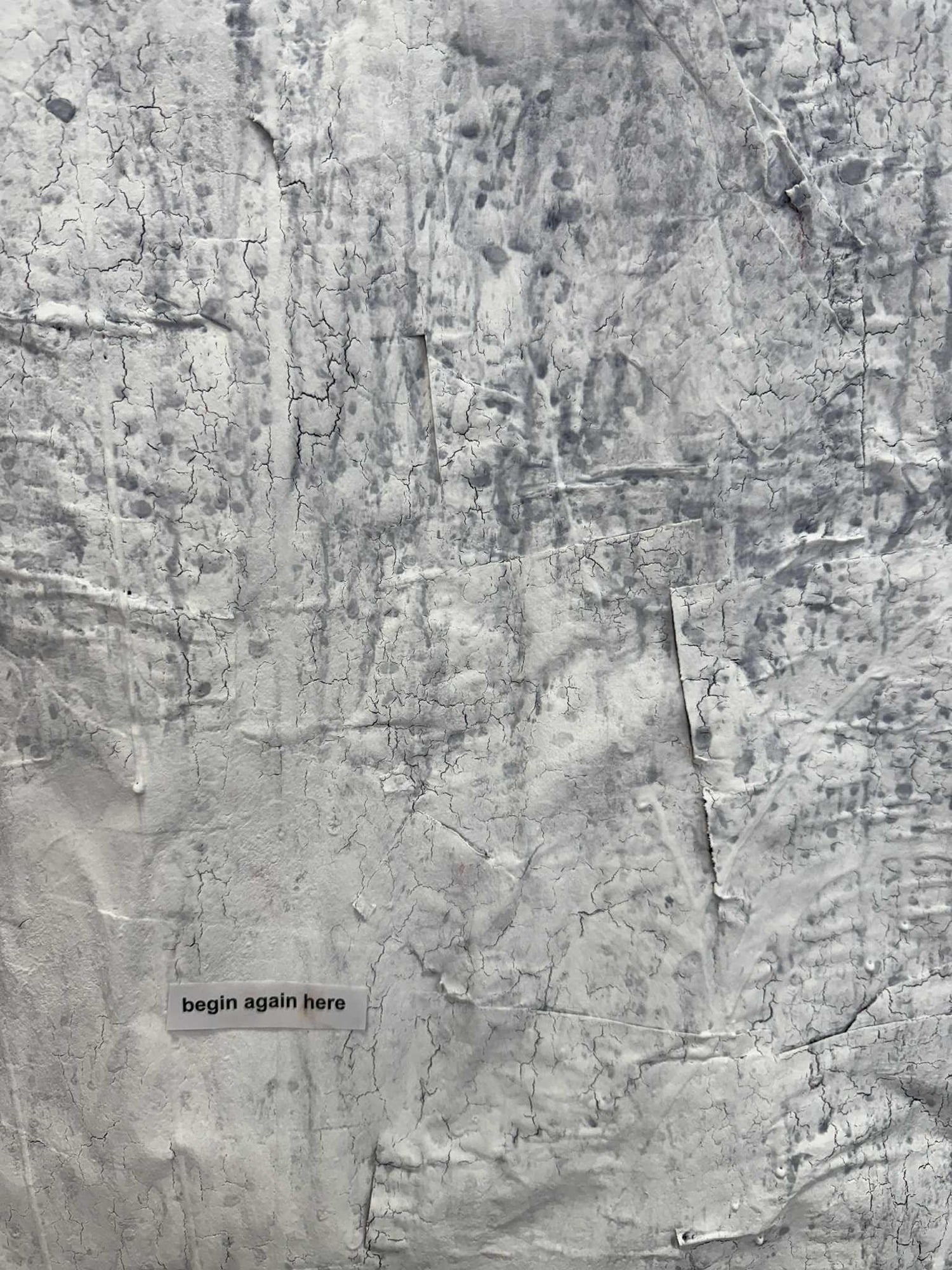
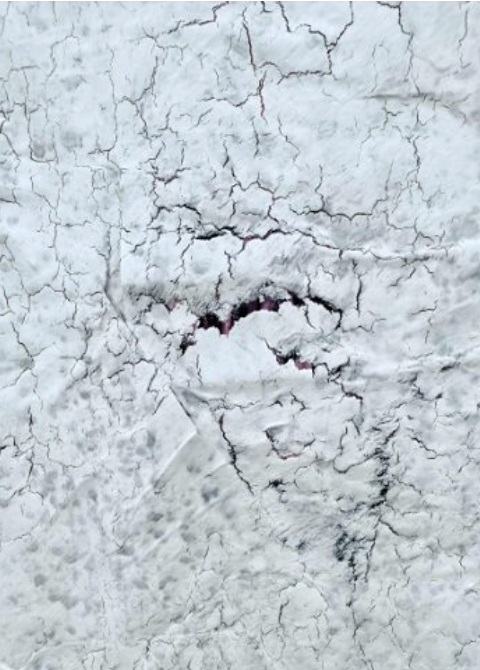
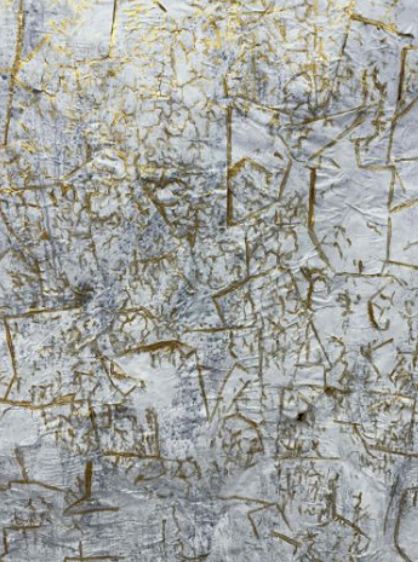
This body of work approached surface as a site of pressure, accumulation, and transformation rather than finish. Materials were allowed to crack, stain, shimmer, and shift over time, registering interaction, exposure, and duration as part of the work itself.
Shimmer and iridescence were used not as decorative effects but as destabilising conditions, interrupting fixed readings and delaying visual certainty. Surfaces operate as communicative interfaces, holding traces of use, damage, and care, and resisting resolution into a stable image or object.
BODY, SURFACE AND VALUE
2025
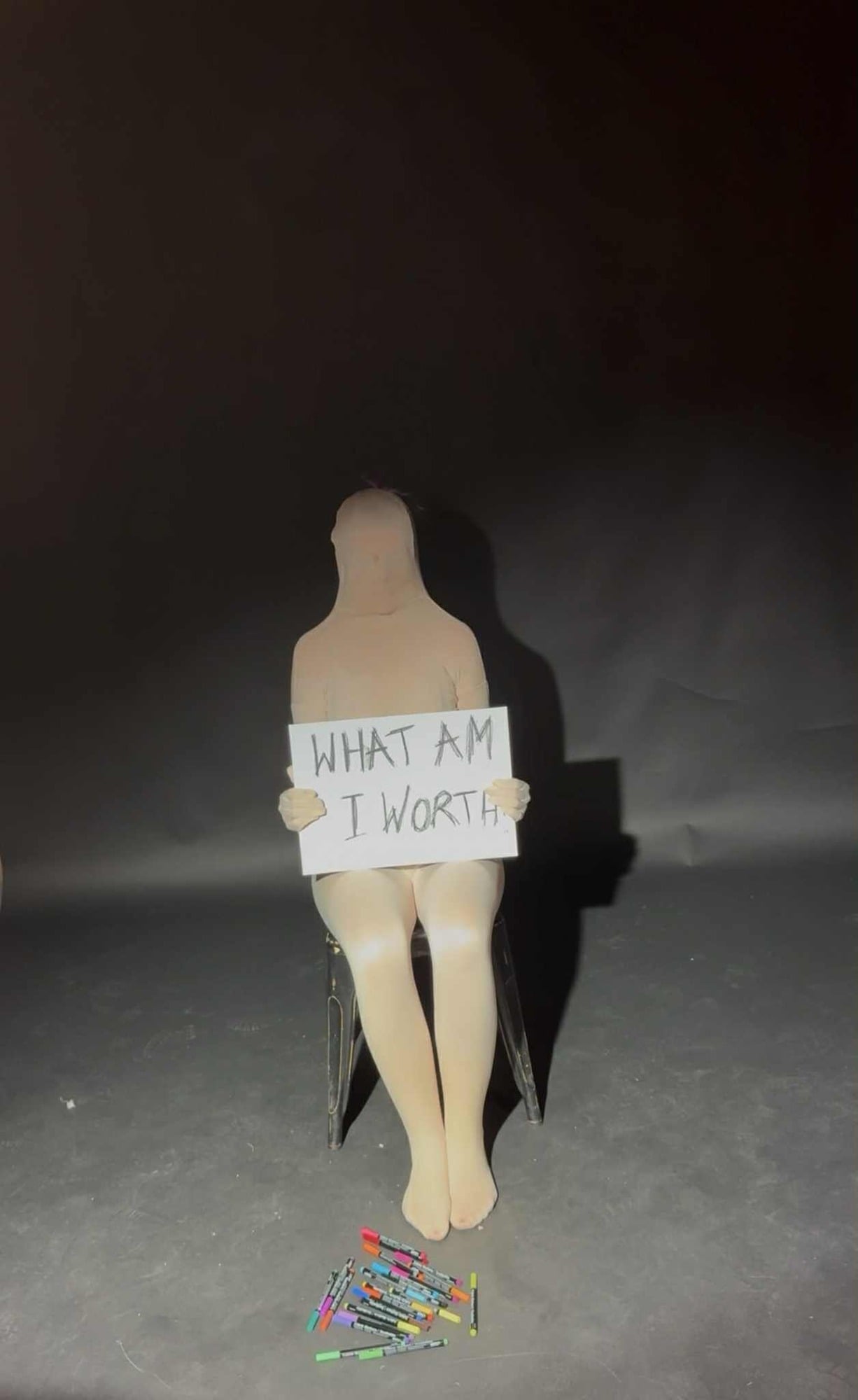
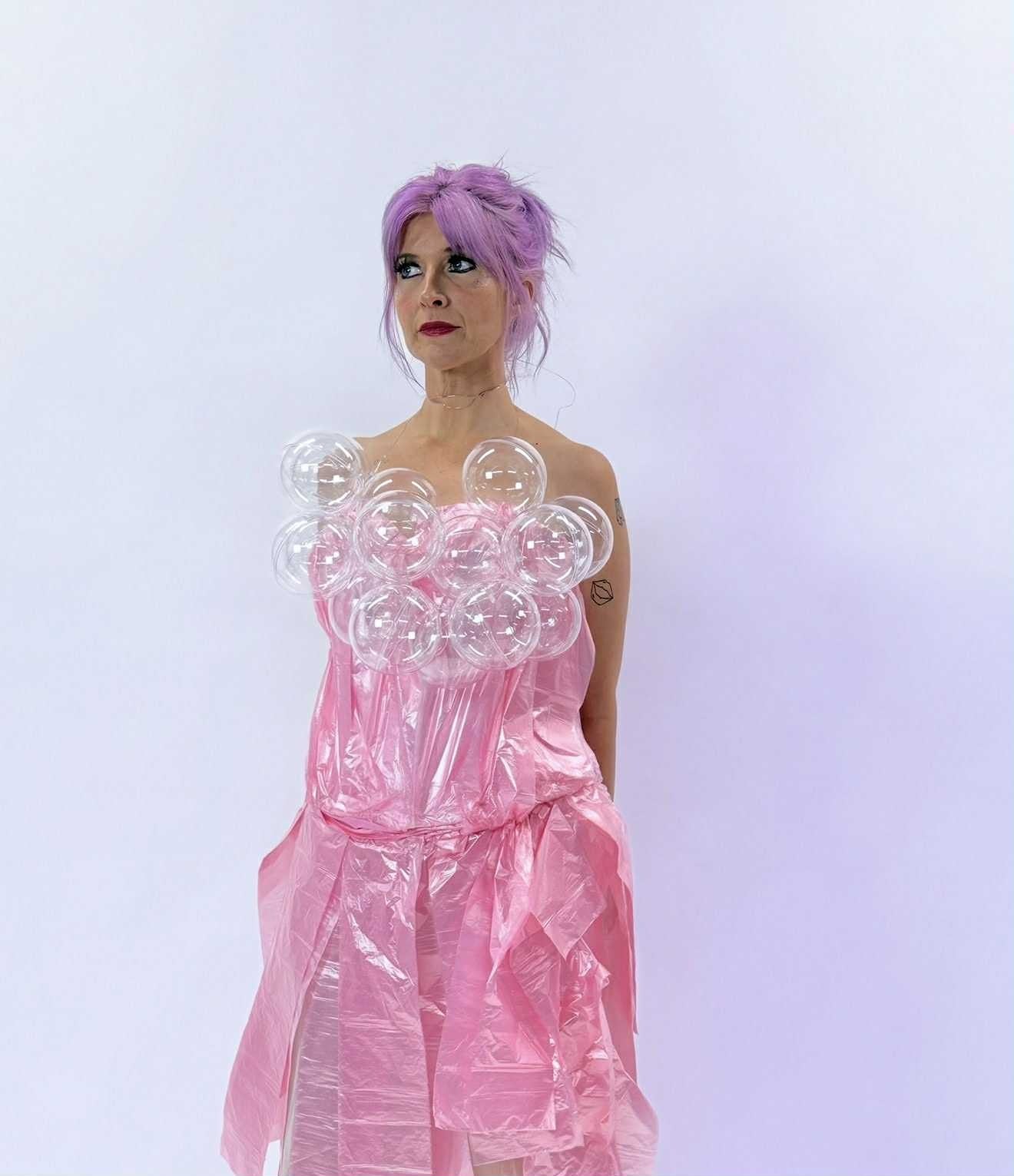
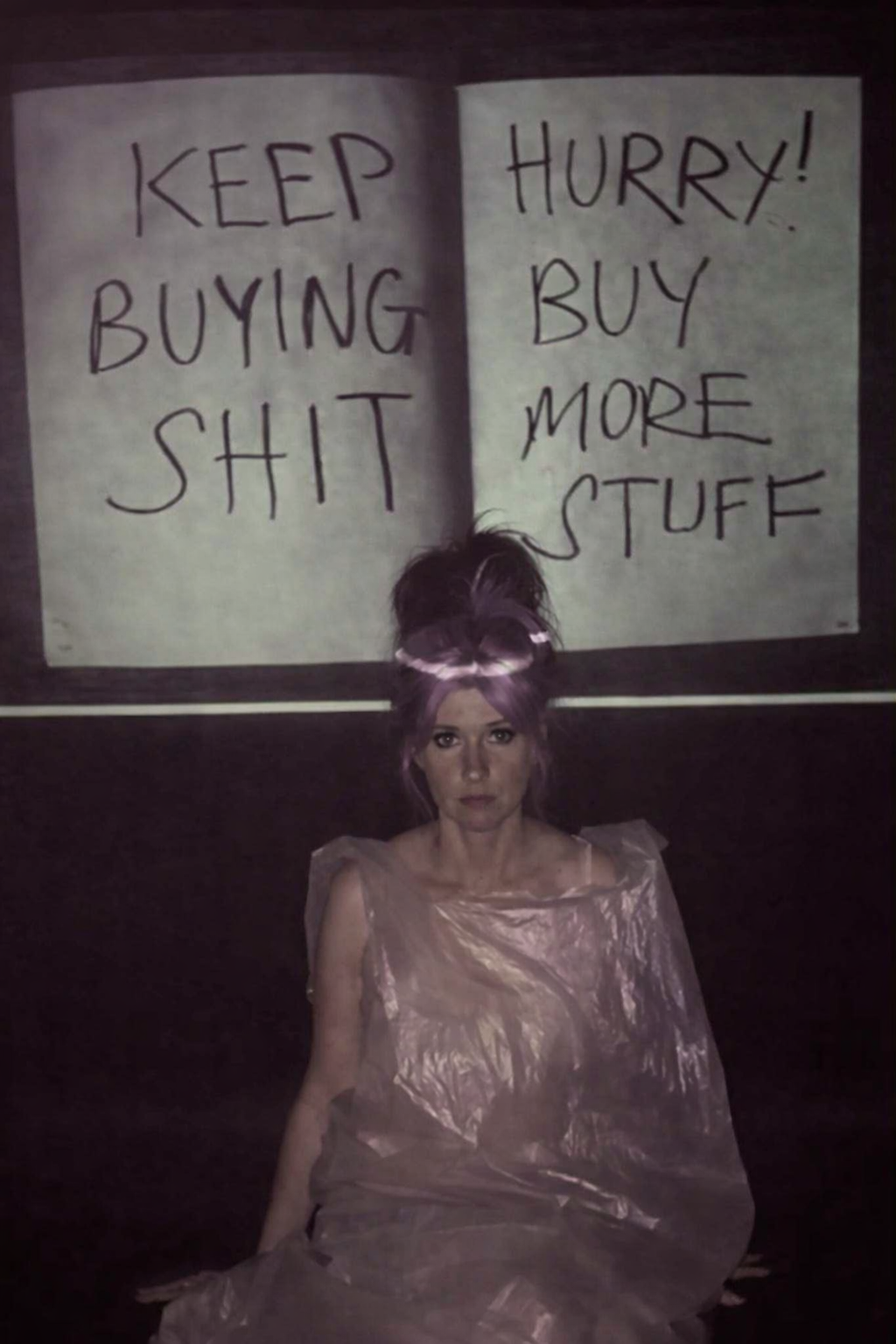
This body of work explores the body as a writable surface through which value, judgement, and cultural expectation are projected and negotiated. Using wearable structures, participatory performance, and material contradiction, the works position adornment not as decoration but as a communicative interface.
Projects including What Am I Worth?, Shit Couture and Material Girl invite audiences to confront how worth is constructed through visibility, femininity, and surface appearance. Text, plastic, and synthetic materials operate as tools for exposing the tensions between glamour and abjection, affirmation and discomfort, control and vulnerability. Humour and excess are used deliberately, allowing joy to coexist with critique and refusal.
Rather than representing the body, these works treat it as a site of inscription and transformation, where meaning accumulates through interaction, duration, and material change.
TEXT, PROTEST, AND VISIBILITY
2020–2024
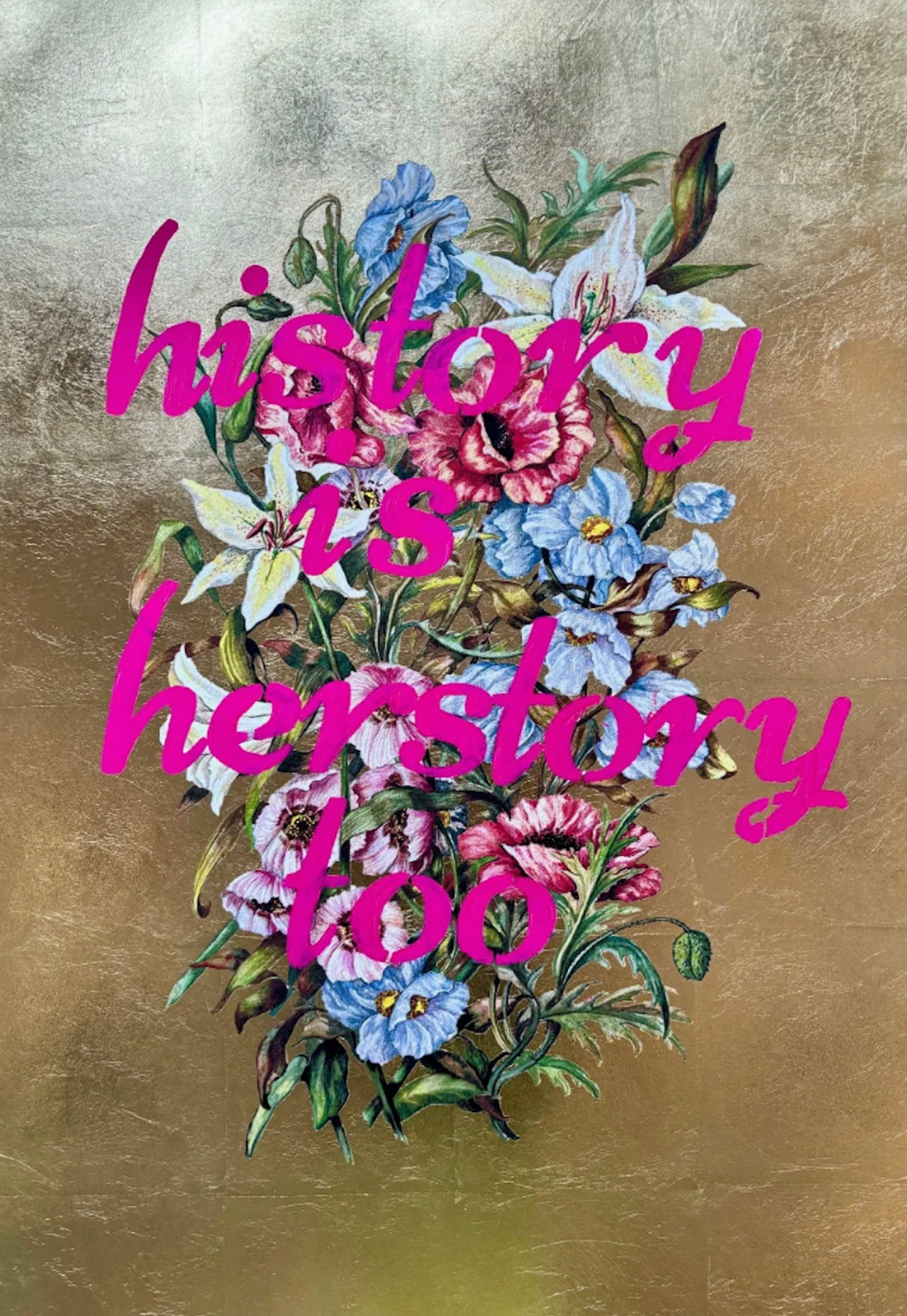
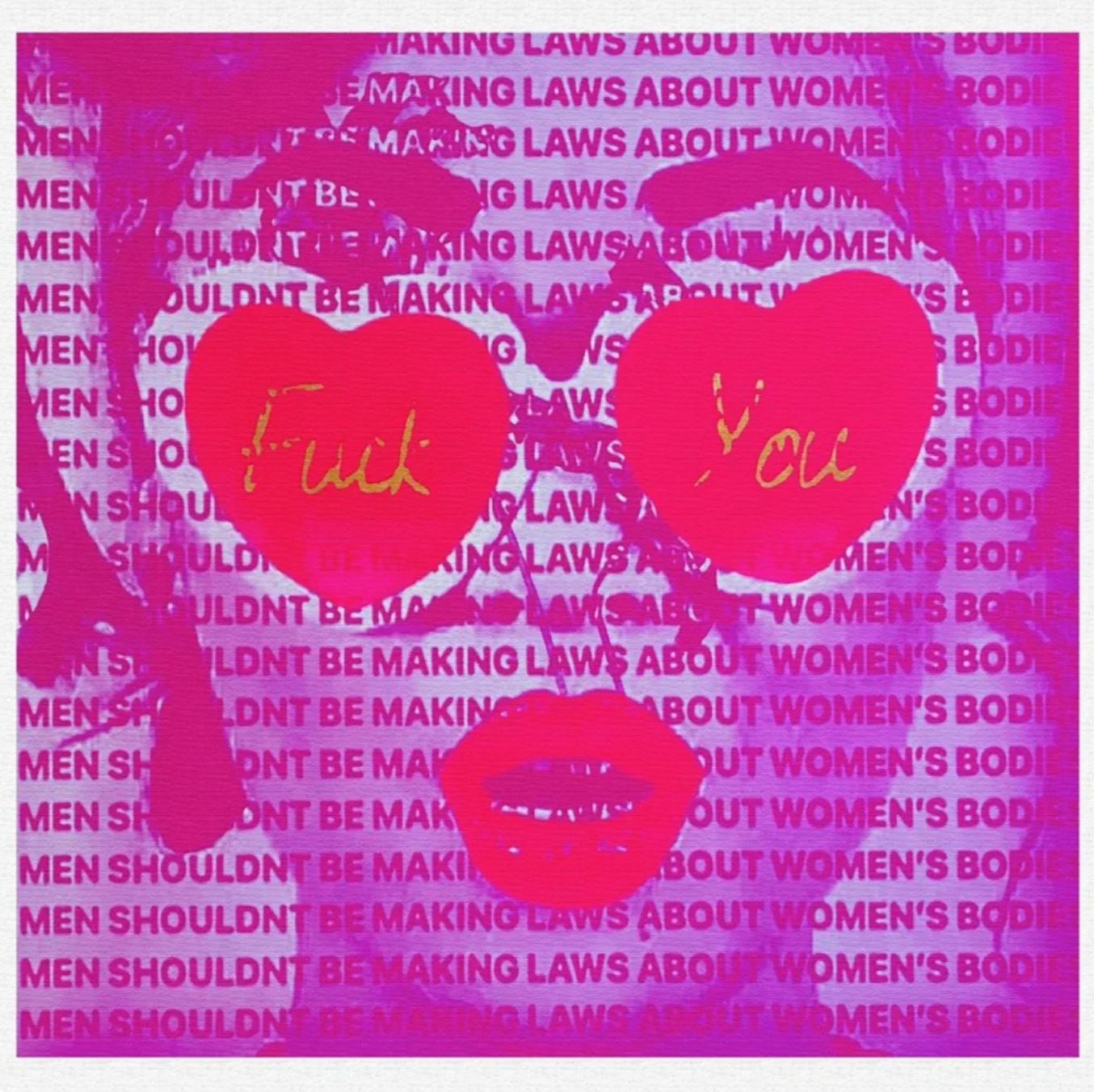
This body of work used text as a form of inscription, layering declarative feminist language onto decorative and visually seductive surfaces. Language functioned as both image and interruption, testing how political statements circulate through visibility, repetition, and excess.
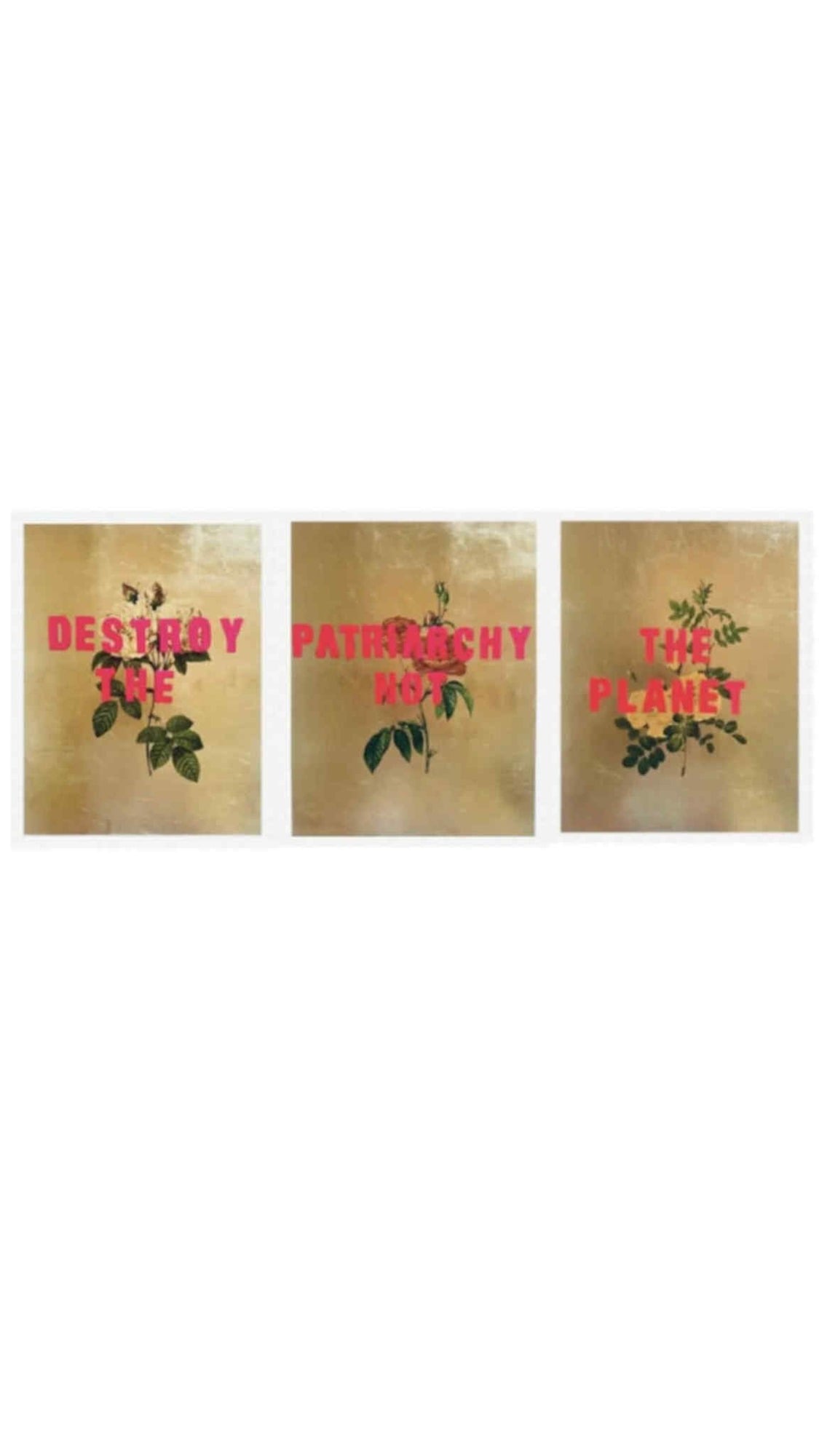
Works including Destroy the Patriarchy Not the Planet positioned slogan-based text within formats associated with consumption and affirmation, complicating the relationship between pleasure, protest, and legibility. Rather than offering resolution, these works foregrounded the tensions between direct address and visual seduction.
MICRO → MACRO / DETAIL → SCALE
2020–2024
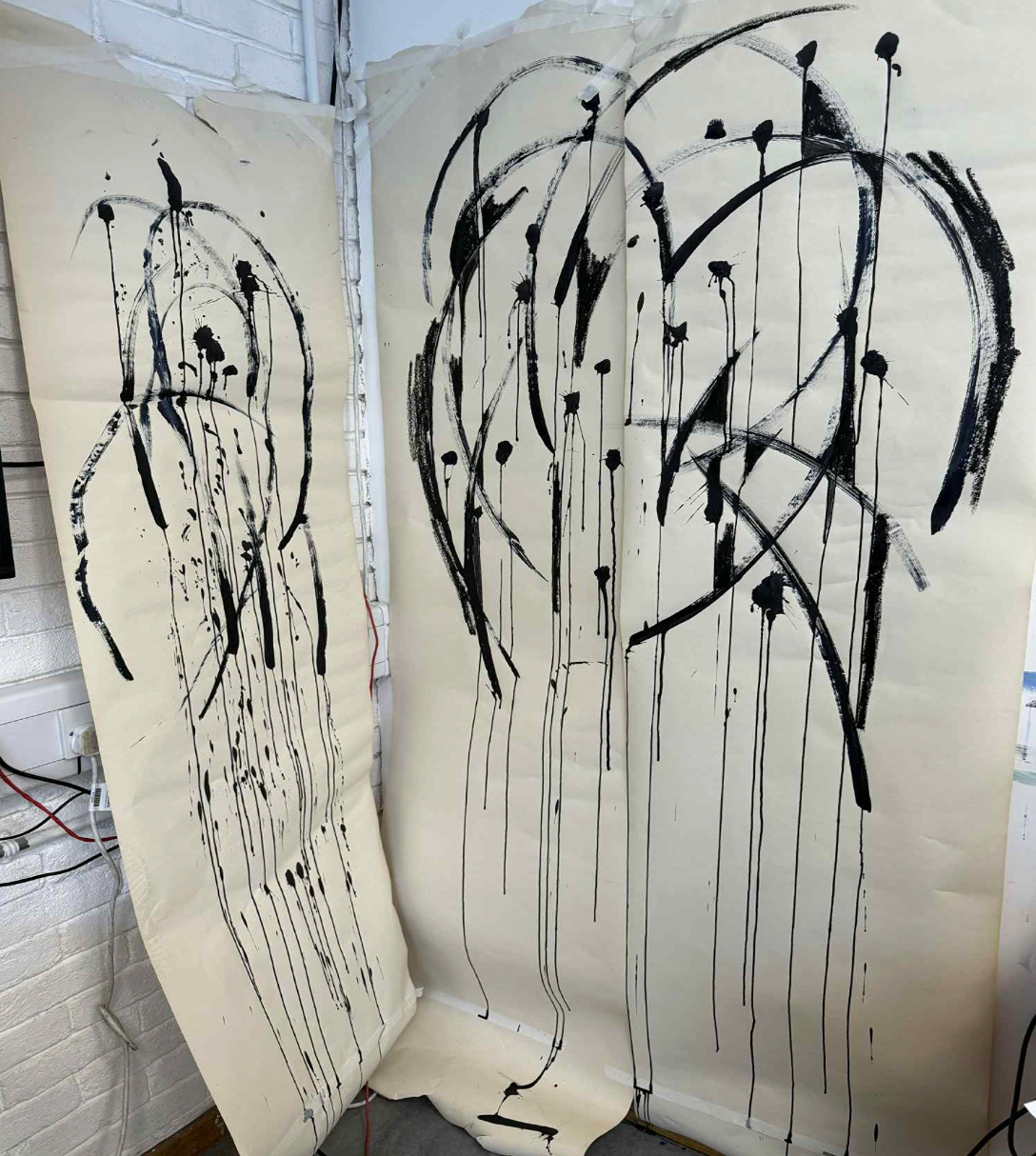
This project explored shifts between intimacy and monumentality, treating scale as an active variable rather than a neutral decision. Close attention to texture and detail was used to generate larger spatial and conceptual structures.
Working through enlargement, repetition, and translation, these early projects established scale as a method for thinking rather than representation. Attention to surface and proximity here formed the groundwork for later spatial, immersive, and participatory practices.
IMAGE, DECORATION, AND EXCESS
2020- 2023
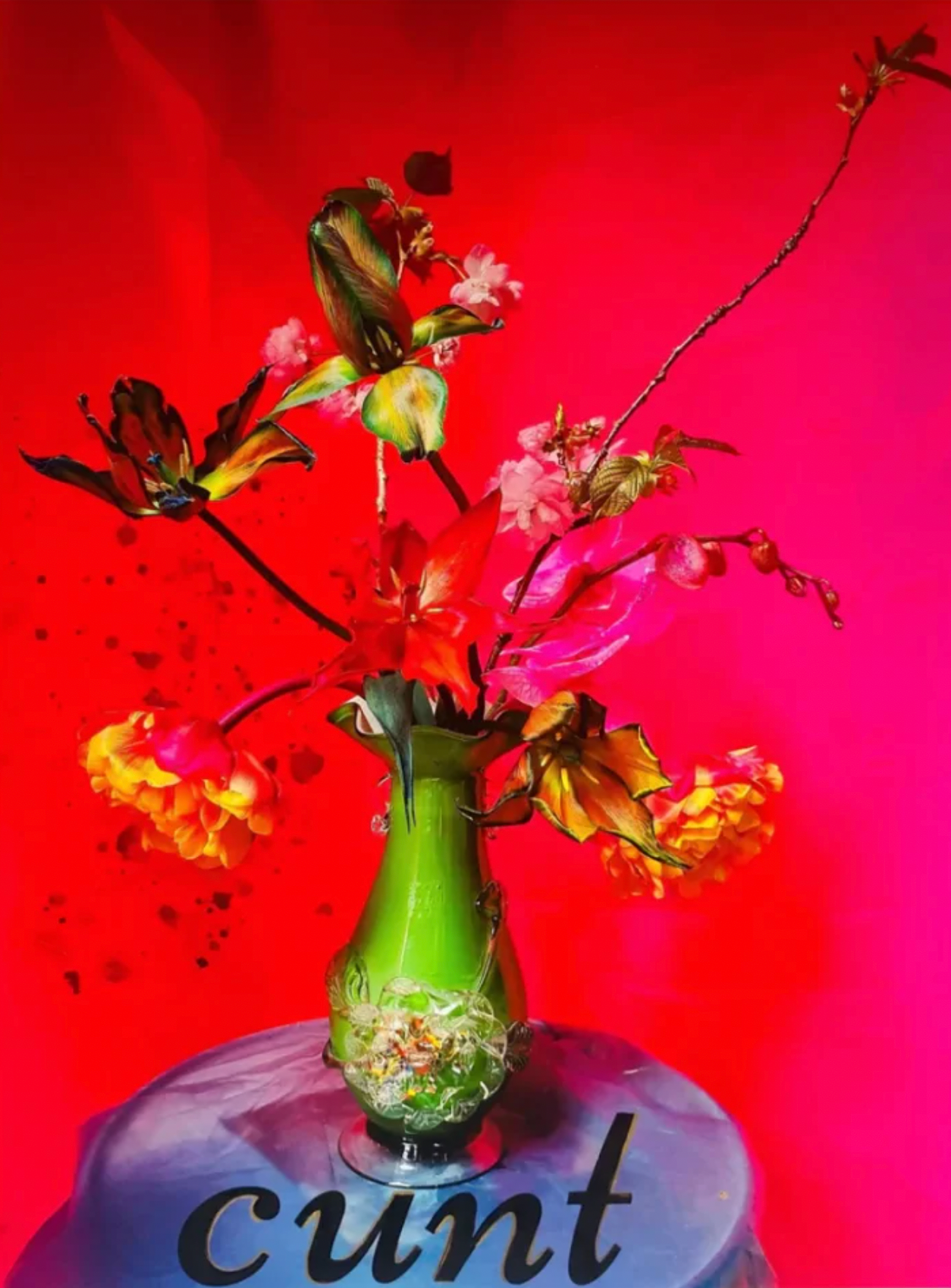
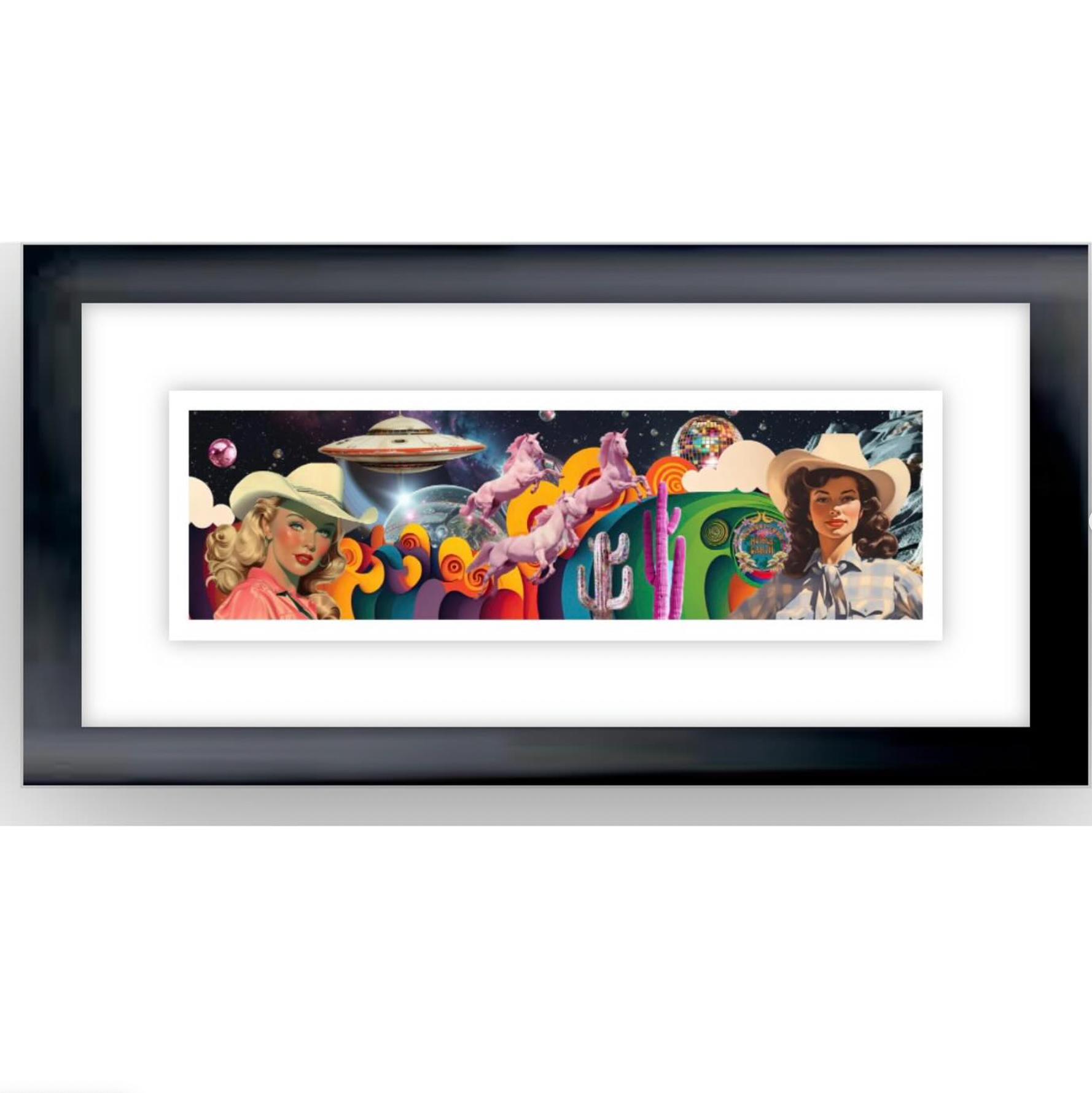
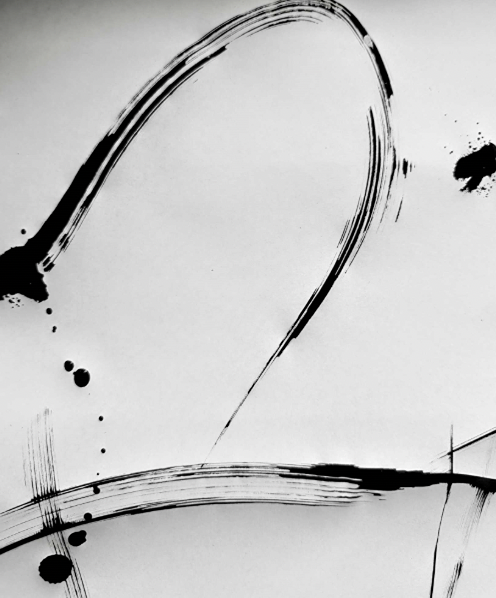
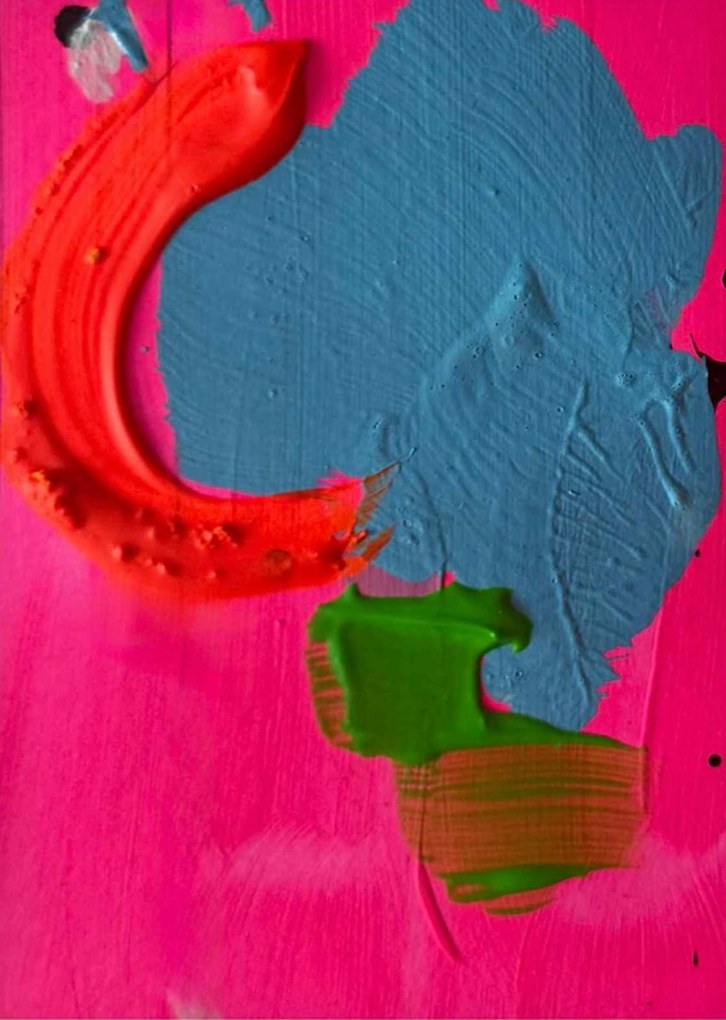
Work with decoration, colour, and excess as deliberate strategies rather than simply as embellishment. These elements — often coded as feminine, superficial, or unserious — become tools for insisting on presence and visibility.
Highly saturated colour, floral imagery, gold surfaces, and ornamental composition operate here as forms of refusal. They resist restraint, minimalism, and neutrality, allowing pleasure, anger, and critique to exist simultaneously.
Excess functions as both attraction and confrontation. The work draws viewers in through surface and intensity, then complicates that pleasure by exposing how value, taste, gender, and power are constructed and consumed.